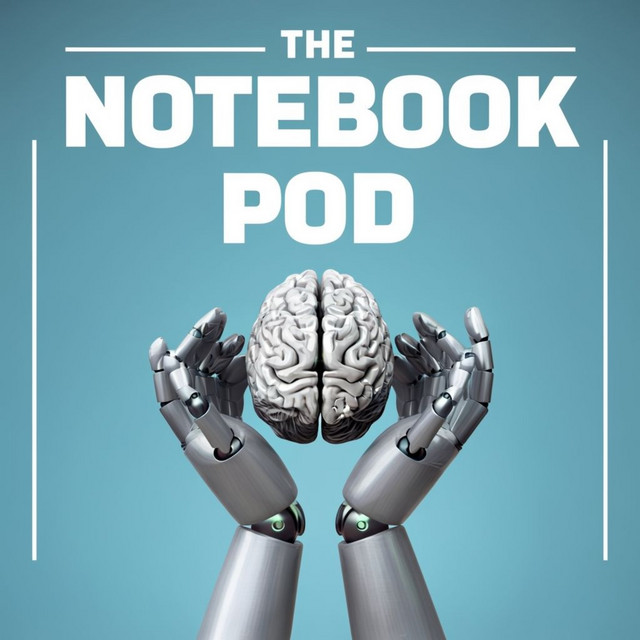
The real question
The real reason I started this was not that I wanted to become a podcaster. I wanted a better way to understand interesting research papers. I can read an abstract, highlight a PDF and take notes, but sometimes the idea only clicks when I hear it explained from two sides. I wanted an audible dialogue that could ask the obvious question, challenge an assumption and slow down when something mattered.
I was not trying to make papers shorter. I was trying to make them easier to think with.
NotebookLM arrives
In September 2024, Google Labs introduced NotebookLM Audio Overviews on X. Two AI hosts could take a collection of sources and turn them into a surprisingly natural conversation. It was not simply a spoken summary. The back and forth gave the material a rhythm, and that made difficult ideas feel more approachable.
The format made difficult material feel less like a document and more like a conversation.
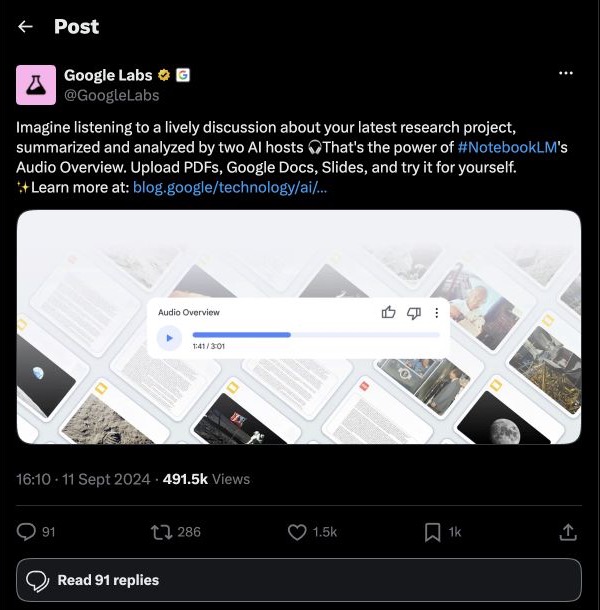
Audio Overviews arrived on 11 September 2024. The source material could now answer back.
The spark
A few weeks later, I saw Andrej Karpathy share Histories of Mysteries, a ten-episode show he had curated with NotebookLM and published in roughly two hours. Seeing the research, generated conversations, artwork and Spotify page together made the path feel unexpectedly close. I decided to try it for myself. The result was The Notebook Pod.
Two hours and ten episodes made the distance between an experiment and a real show feel very small.
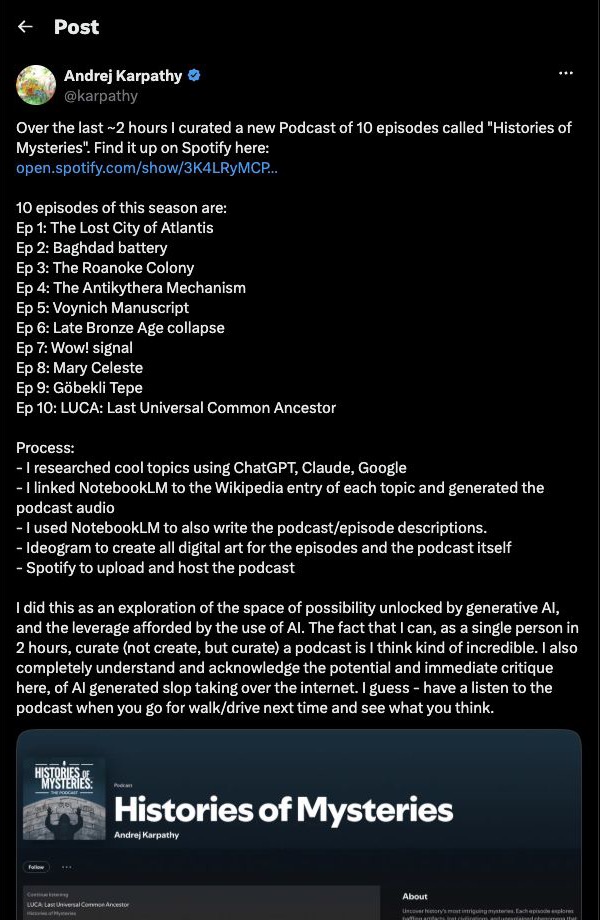
Research, generated dialogue, artwork and Spotify became one visible publishing path.
Building the catalogue
I built the show around one artificial intelligence paper per episode. I started with papers I genuinely wanted to understand, gave the source material to NotebookLM and listened to the first Audio Overview. If the conversation helped me see the paper more clearly, it had done its job. If it stayed too high level or wandered away from the interesting part, I tried again.
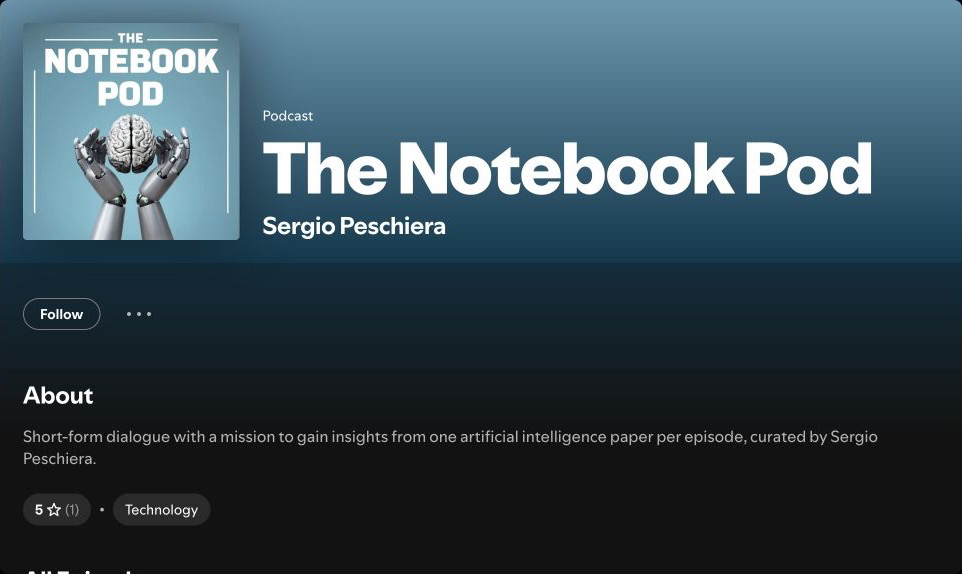
The experiment became The Notebook Pod: one artificial intelligence paper per episode, created and curated by me.
Prompting became a way to shape how I wanted to learn.
That meant prompting my way through the learning experience: the focus of the discussion, which ideas needed more attention, the duration, the tone, the intro and the outro. Small instructions mattered. A tighter focus could reveal the actual contribution of a paper. A better question could make an unfamiliar concept click.
Along the way, I also learned what sits around a podcast. I listened back, edited, made artwork, wrote descriptions, prepared the audio and worked through Spotify's publishing flow. I had always wondered how those pieces came together, and suddenly I had a small show that forced me to learn each one.
Pressing publish
The catalogue eventually reached Episode 23, covering topics such as multi-agent systems, analogical reasoning and backdoor attacks in LLMs. The episodes were not perfect. Sometimes the hosts sounded too polished or repeated a phrase. Still, seeing my own artwork, name and episodes inside Spotify was a small magical moment. A research paper had become something I could revisit while walking around.
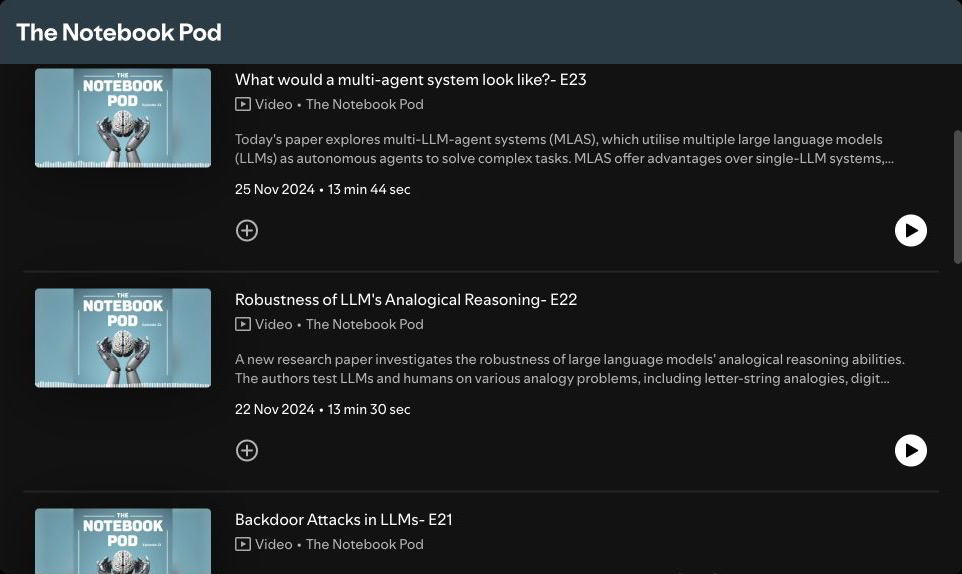
By Episode 23, the subjects moved from multi-agent systems to reasoning and LLM security.
The episodes mattered because they let the papers travel with me.
The experiment changed how I think about generative AI. It can make the first draft almost instant, but direction still matters. The real work moved into choosing a worthwhile paper, noticing where the explanation was weak and shaping the conversation around what I wanted to learn. The show was the output. Better understanding was the point.
The next question
The Notebook Pod also left me with one bigger question: could I build the entire experience in one place, from finding a paper to having the conversation and preparing the finished audio? That question inspired Virtual Podcast Studio. The podcast is where the idea began.